
McCormick Warrant Profile Stays Conditional
McCormick is an incorporated town with a population of 2,232 in the 2020 Census. The Town maintains a police department, so residents have a verified local law-enforcement contact. The source review did not find a McCormick municipal court entry in the statewide municipal-court roster, and it did not establish a town warrant list, clerk, or payment window. That gap matters: this town page identifies where to ask, but it does not claim a separate local court exists. When the event was handled by another court, that court controls the record.
The population figure describes the town’s size at a census date; it does not report local court volume, warrant counts, or police caseload. The sources also provide no update schedule for a town warrant roster because no such public roster was located. Keep those limits in mind when a general town directory or demographic page appears beside court-search results.
The U.S. Census Bureau’s 2020 incorporated-place table lists McCormick among South Carolina municipalities.
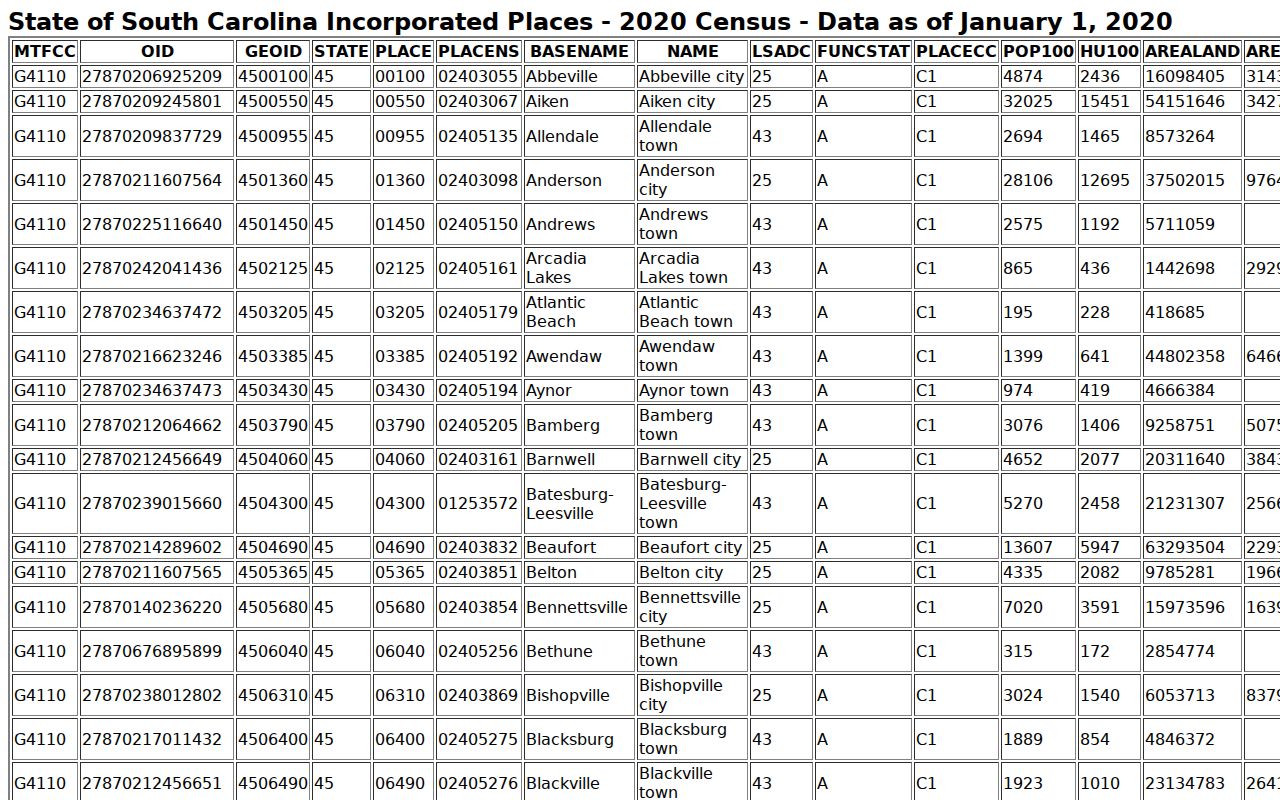
The demographic table is useful for town identification; it contains no court docket or warrant-status data.
How to Check for a Warrant in McCormick
Start with the agency tied to the incident and ask which court received the case. A town citation, an arrest on a county charge, and a missed hearing can lead to different record custodians. The town’s public contacts help route a question, but they are not a published warrant lookup.
- Gather the citation, court notice, approximate date, and the name used in the case.
- Call McCormick Police if the matter began with a town police contact; ask whether it was referred to a court.
- Use the state traffic-ticket portal only for an eligible citation, selecting a search method that matches the information you have.
- Ask the named court whether it issued a warrant or has a next appearance date.
- If the case is county-level, contact the Sheriff or Magistrate’s Office; discuss next steps with a South Carolina lawyer.
McCormick Police Calls Need Warrant Confirmation
The Town’s Police Department lists 864-852-2985 for its business contact. Dispatch and non-emergency calls route through 864-465-3211, while Town Hall can be reached at 864-852-2225. Those are distinct paths: Town Hall is a municipal administration contact, and dispatch is not described as a public warrant-status desk. Give the office the event date and citation or case information, then ask which agency can confirm the current court record. For immediate danger, use emergency services rather than a records number.
The McCormick Police Department and Municipal Court
McCormick Police is the verified town law-enforcement contact. The public materials reviewed identify no local warrant-search page. State law allows municipal courts to hear specified local matters, but a town’s existence and police department do not establish that it operates a separate court. Confirm the actual court named on a citation, summons, or bond paper before asking about a filing or balance.
McCormick Municipal Court Status Needs Confirmation
The statewide municipal-court roster reviewed for this project did not list McCormick. This is a source limitation, not proof that a town-level proceeding could never exist or that no agency handles a particular citation. It does mean there is no verified basis here to publish a McCormick court clerk’s name, address, online case page, local payment method, or warrant counter.
If a notice names a court, use that office’s current contact details and ask whether it is the issuing court. If it names no court, call the Town’s official number and request the proper referral. A blank search or absent roster line should not be read as confirmation that a warrant is absent.
Types of McCormick Warrants
The record source, rather than the town boundary alone, determines what kind of warrant may apply. These are possible distinctions to clarify with the issuing office; they are not a claim that McCormick publishes each category or that a municipal court has been verified.
| Warrant Type | How It Arises | Who Issues It |
|---|---|---|
| Traffic matter | Whether the citation is in Summary Court or another court | Ticket portal, then the court shown |
| Missed appearance | Which court set the date and whether it issued process | Court named on the notice |
| Criminal arrest warrant | Issuing authority, charge, and current status | Sheriff or issuing court |
| Town ordinance case | Whether a municipal court accepted the matter | Town referral, then confirmed court |
McCormick Citation Search Has Three Paths
South Carolina’s Traffic Ticket Search is a citation lookup for Summary Court and some Municipal Court tickets; it is not a warrant search. The portal accepts a citation number (up to 20 characters), a driver’s license number with its state, or a first and last name with date of birth. Choose the route that matches the ticket. A missing result may mean the matter is outside the portal, the entry is not available there, or the search details need review.
Even when a ticket appears, check the court and case status shown on the record. A payment option or balance does not by itself show whether a separate warrant has been issued, recalled, or served. The court handling the citation can explain what action is recorded and how to address it.
What a McCormick Warrant Record Shows
No local McCormick warrant-number pattern or public warrant-record layout was verified. If an office confirms a matching record, ask for the issuing court, case identifier, charge, and current disposition rather than relying on a name match alone. Compare spelling and date details privately with the official record.
| Case or citation number | Use the identifier printed on the notice; no McCormick warrant format is published. |
|---|---|
| Name and date | Confirm the match with the issuing office; similar names can refer to different cases. |
| Charge or reason | Ask the court to explain the recorded allegation or missed setting. |
| Issuing court | Use the actual court identified in the case paperwork. |
| Bond or balance | Confirm current terms directly; ticket payment and bond are different processes. |
| Status | Request the current status and the date the office checked it. |
McCormick’s Gold History Does Not Describe Court Records
The Town’s history notes the area’s gold discovery around 1850, the Dorn Gold Mine, and the town’s naming in 1882 in honor of inventor Cyrus McCormick. That heritage explains the community’s identity; it offers no clue about present court jurisdiction or warrant status. For the historical account, consult the Town of McCormick’s official website. For a current case, use the issuing agency and court identified in the documents instead of inferring a process from local history.
Keeping those questions separate prevents an attractive local-history source from being mistaken for a court directory. The Town’s general information pages can help with civic contacts, while case questions still need a named record custodian.
The history page and the police contact page serve different purposes. A town name, historical boundary, or gold-mining reference does not show whether a citation became a court case, whether a missed setting produced process, or which agency received a warrant for service. Use the current notice and agency referral to follow that chain.
Where McCormick Warrants Fit With McCormick County
A town contact can route a local question, while county-issued matters belong with the McCormick County Sheriff or the court that issued them; begin at the county warrant records page for those county routes. A statewide search should not be assumed to provide a complete public wanted-person list.
Possible route: Town contact › confirmed court › county office when the case is county-level.
McCormick Warrant Numbers Are Not Published
The sources reviewed did not establish a town case-number pattern, status-code key, or warrant sequence for McCormick. Do not treat a number format from another South Carolina locality as a local identifier. When speaking with an office, provide the number on the citation or notice, the approximate filing date, and the court name, then ask what identifier is needed to locate the entry.
If staff cannot find a record from the first detail, confirm whether the case was transferred or entered under a different court. Keep a note of which office you contacted and when; status can change after a court action, so use a fresh confirmation before relying on an earlier answer.
Public Access to McCormick Warrant Records
South Carolina’s public-records law provides an access route for government records, but a request does not guarantee release of every warrant-related item. Law-enforcement records may be withheld or redacted under statutory exemptions; juvenile, sealed, and other protected court matters have separate limits. Rule 610 governs bulk distribution and compiled judicial-record information, including conditions on release. Ask for a specific record or case and let the custodian decide what can be disclosed.
Key Rules:
South Carolina Freedom of Information Act, Title 30, Chapter 4 provides a process to request public records, subject to statutory exemptions and redactions.
South Carolina Rule 610, SCACR governs bulk distribution and compiled information from judicial records; commercial requests for those records are not provided.
South Carolina Code § 30-4-40 lists categories of public records that may be exempt from disclosure.