
McCormick County Warrant Service Is Phone Routed
Two numbers circulate for the McCormick County Sheriff's Office. The county page gives 864-465-2520, while the Sheriffs' Association directory also lists 864-465-3200 as a main office line. Treat the gap as a prompt to verify, not as two guaranteed warrant lines. Call the county contact first. Ask for the current Records/Warrant Service procedure before going further. Do not assume a staff member can disclose unserved process by name alone. For a signed order or docket history, the issuing Magistrate or Clerk is the right office instead. For orientation, the association publishes a separate McCormick office directory.
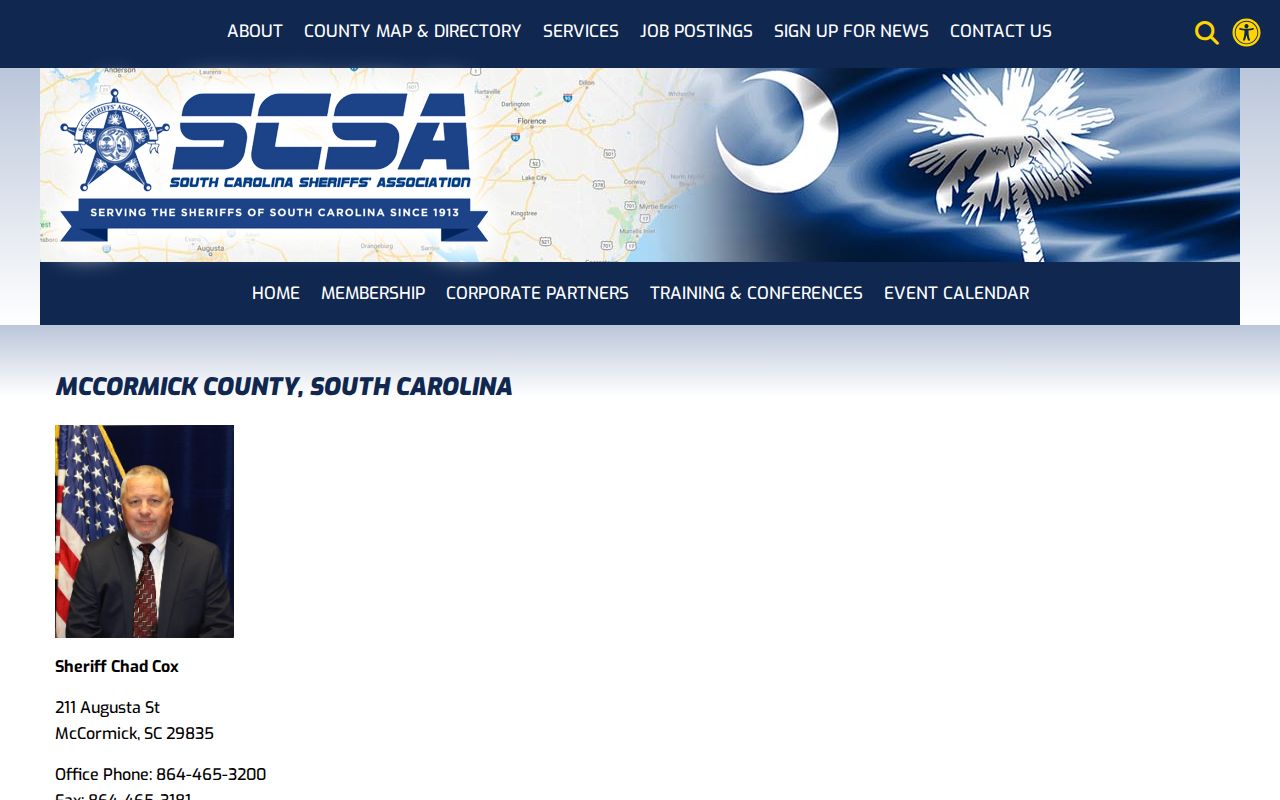
Before you share private details or drive to the McCormick County office, verify both the number and the desk you actually reached.
Active Warrants in McCormick County
McCormick County publishes no active-warrant roster. Nothing on the public web offers a downloadable McCormick County list. The Sheriff's Office page names Records and Warrant Service. It just posts no self-search. That absence says nothing about what the Sheriff or the courts hold. An outstanding warrant, in general, is process the issuing court has not recorded as ended. The court's file controls that status. A Sheriff's service record shows only whether the agency received or returned the paper. Related records, but not interchangeable. For one case, ask the court to check its current entry. Then ask the service agency whether it holds returned paper. Give the case number from the notice when you can. Confirm the court's division before relying on any answer. A docket event, an officer's return, and a live service status may sit in separate systems and update at different times. The phone discrepancy makes source choice practical: confirm the current number on McCormick County's own page, then ask for the Records/Warrant Service route. A directory from another organization helps you orient, but the office itself should say how it takes an individual status question.
McCormick County Lists Have No Update Schedule
McCormick County posts no active-warrant list, so there is no refresh schedule, removal rule, or date stamp to consult. A roster on an outside site may be stale or incomplete. It may even pull from a different court. A served warrant can also linger in one system until the court or agency enters a later return.
How the McCormick County Active Warrant List Works
There is no public McCormick County list to explain. No single roster gathers every Magistrate, General Sessions, Family Court, municipal, and federal warrant; each office covers a different jurisdiction. A court roster is not a warrant list either. For a personal inquiry, use the court named in your notice. Don't infer a countywide result from unrelated databases. A missing entry can reflect search coverage, court division, spelling, or a record restriction. A present entry can be outdated too. The McCormick County office that holds the file can say whether a later order changed it, and the service agency can explain its own return.
Note: A missing or stale online entry cannot settle the status of a McCormick County warrant; the issuing court must confirm its current record.
McCormick County Court Rosters Are Different
The South Carolina Court Roster Search locates a court. The McCormick Public Index link opens a court roster interface. Neither one is a McCormick County active-warrant list. The Public Index's filters and status terms are not documented, so ask the Clerk or Magistrate to interpret a case record. Rule 610 governs bulk distribution and compiled judicial information. The Public Index also carries its own search-use terms. A court roster can help route a question about one case. It is not permission to assemble names from many records into another list. The access notice sits on the South Carolina Public Index portal.
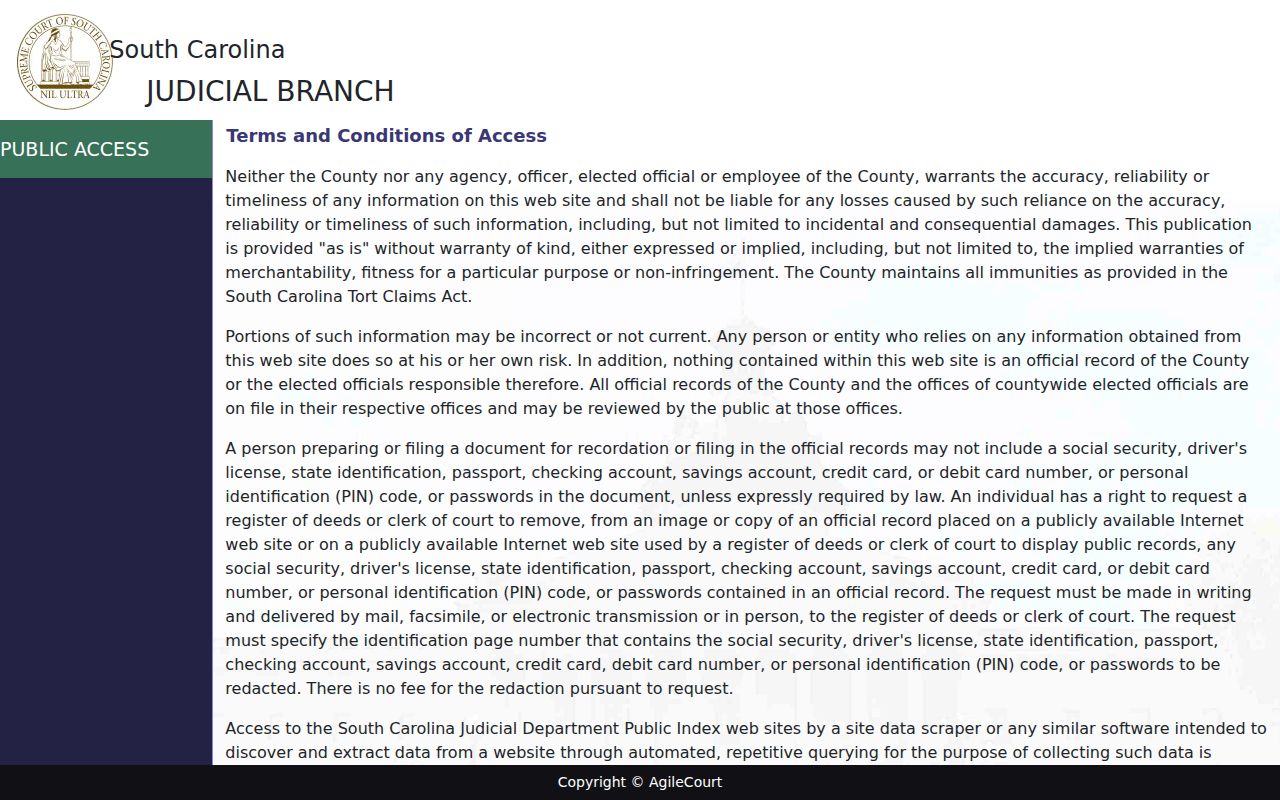
Use a normal court interface for your own record and follow its access conditions. One caveat matters. A Public Index entry may show a case event without revealing whether an agency completed service or whether the court later recalled the warrant. A roster's job is to locate an office. It cannot merge every active McCormick County case into one list. When you ask the Clerk or Magistrate about an entry, bring a specific case identifier.
What an Active Warrant Shows
McCormick County publishes no warrant schema or local status-code guide. Blank South Carolina forms show what court process may carry: the court and case, person, trigger, charge or bond issue, judge, date, service authority, bond direction, and return. A public docket may reveal only some of those fields. Protected records may not appear at all.
| Case or warrant number | Use the number printed by the court; no local format is published. Local format unknown |
|---|---|
| Charge or trigger | May identify an alleged offense, missed hearing, or bond issue. |
| Issuing court | The court that controls later process and status updates. |
| Bond direction | Case-specific terms set by a judicial officer; there is no countywide schedule here. |
| Service and return | May note service, nonservice, or custody, depending on the record shown. |
McCormick County CATCH Omits Wanted Status
SLED CATCH sells criminal-history reports, but the service itself excludes wanted-person information, and that exclusion is stated on its own notice page. So a paid report cannot stand in for the missing public active-warrant list in McCormick County. The traffic portal has its own limits. It can find eligible citation records, yet it does not certify whether a warrant exists or has been recalled. For a question about yourself, contact the issuing court directly. The Sheriff's Records/Warrant Service channel can also explain how to route a service inquiry. Missed a Magistrate date? Call the Magistrate's Office instead of trusting an unrelated report or a search result. You can read the exclusion yourself at SLED CATCH.
Most-Wanted Lists and Warrant Roundups
McCormick County has no most-wanted program, no public active-warrant roster, and no warrant-roundup announcements that its offices publish. The Sheriff's Office page is an agency contact point, not a list of people. There is no local Crime Stoppers partnership, tip app, reward rule, or update schedule to check. Use the official Sheriff page for phone numbers and office details, not as a roster substitute.
Key point: A public list was not found for McCormick County. Do not treat a missing name on an outside site as proof that no warrant exists.
McCormick County FOIA Cannot Make a Live List
A South Carolina FOIA request can reach an existing nonexempt record, such as a named service return or a written records policy. It cannot make the Sheriff build a live countywide warrant list or certify that a person's status is clear. McCormick County links a local policy and fee schedule, though its PDF is unavailable, so ask the county for current instructions. Law-enforcement material, juvenile matters, sealed items, and private details may be redacted or withheld. The statute's response periods are not a same-day warrant lookup. Identify the likely custodian and ask whether a reasonably separable public portion can be released. When you write a request, describe one existing record as narrowly as you can, such as a dated return tied to a known case identifier. A broad ask for every McCormick County warrant will not get you one. South Carolina law generally gives a public body ten business days to state its determination, or twenty when a record is more than two years old. Production may come later than that. FOIA cannot force an office to build a current status list from several systems. It also does not remove statutory exemptions. If access is approved, the statute generally allows thirty calendar days after the determination for production, or thirty-five days for a record more than twenty-four months old. A deposit or a written extension can change that timing. Ask the custodian which existing item it can actually search. That question works far better than an open-ended demand. You can start with the county FOIA page and read the South Carolina FOIA statute yourself.
If Your Name Is on the List
First confirm the source. Was it an official record, and which court issued the process? Call that court before you go anywhere near the detention center, because McCormick publishes no public walk-in surrender schedule. Ask about a new date, a voluntary appearance, bond setting, or a motion to recall, and think about talking with a lawyer first. If the problem is a missed court date, the county warrant overview lays out local court contacts and the steps to resolve it. Keep your notice or docket details at hand when you call. Share only what the official office actually needs. Ask which location handles the matter, whether the court wants a written request or a scheduled appearance, and what record will show after an order is entered. The Magistrate's administrative office and Bond Court are distinct settings. Never assume the detention-center address doubles as a public walk-in desk.
Important: Do not approach or confront anyone based on an online claim. For a personal status question, contact the issuing court or a lawyer.